
Introduction
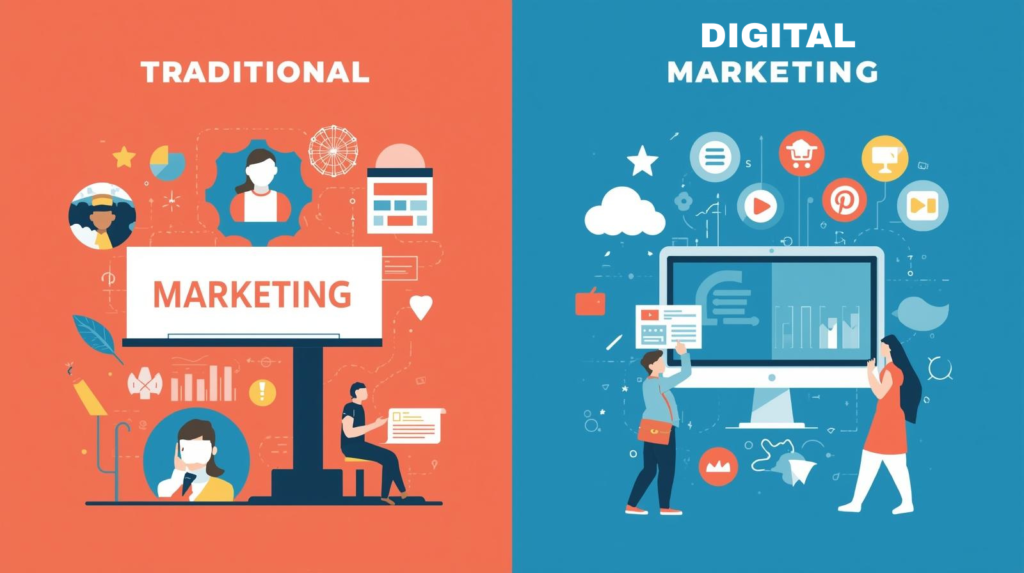
Marketing is a crucial part of every business. No matter what you sell or what service you offer, people must know about your business. Without marketing, even a good product may not reach customers.Marketing methods have evolved significantly over the years. Earlier, businesses mostly depended on newspapers, television, radio, banners, and posters. Today, many businesses use the internet, social media, websites, and online ads. This brings us to an important topic: Traditional Marketing vs Digital Marketing.
Many business owners, especially small businesses in Kerala, often feel confused about which method to choose. Some people trust old and familiar methods. Others prefer modern online platforms.Each approach comes with its own benefits and drawbacks.
Understanding Traditional Marketing vs Digital Marketing helps businesses make better decisions based on their goals, budget, and target audience.
Traditional marketing has been used for many decades. People are comfortable with it because they see ads in daily life. Digital marketing, on the other hand, is growing very fast. More people are spending time online, making it a powerful space for promotion. Because of this shift, businesses must clearly understand the difference between Traditional Marketing vs Digital Marketing.
In this blog, we will explain both marketing styles in very simple language. The goal is to help beginners, students, and business owners understand how each method works. There are no complex terms or technical explanations here. Instead, you will find easy ideas and practical knowledge that anyone can follow. By the end, you will have a clear picture of Traditional Marketing vs Digital Marketing and how they affect modern business growth.
Body
To understand Traditional Marketing vs Digital Marketing, we must first clearly define what each term means and how they function in the business world. Both marketing methods aim to promote products or services, attract customers, and increase sales. However, the way they reach audiences and deliver messages is very different.
Traditional marketing refers to the classic forms of advertising and promotion that businesses have relied on for decades to reach customers through offline channels. These include television advertisements, radio commercials, newspaper ads, magazine promotions, billboards, brochures, flyers, and direct mail. In this method, businesses communicate their message to a large audience through offline channels. It is usually one-way communication, meaning customers see or hear the advertisement but may not directly interact with it. Traditional marketing works well for building brand awareness, especially among local communities or older audiences who rely more on offline media.
On the other hand, digital marketing uses online platforms and internet-based technologies to promote products and services. This includes social media marketing, search engine optimization (SEO), content marketing, email marketing, influencer marketing, and paid online advertising. Digital marketing allows businesses to connect with their audience through websites, search engines, and social media platforms. Unlike traditional marketing, digital marketing supports two-way communication. Customers can like, comment, share, review, and directly interact with brands.
Another key difference is targeting and measurement. Traditional marketing often targets a broad audience, and measuring results can be difficult. In contrast, digital marketing allows precise targeting based on age, location, interests, and online behavior. Businesses can also track performance in real time, such as clicks, impressions, conversions, and return on investment.
Understanding these basic definitions is important before comparing Traditional Marketing vs Digital Marketing in detail. Once we know how each method works, it becomes easier to identify their strengths, limitations, costs, and suitability for different types of businesses.
What is Traditional Marketing?
Traditional marketing refers to the older forms of advertising and promotion that existed before the internet became popular. These methods include:
- Newspaper advertisements
- Television commercials
- Radio promotions
- Posters and banners
- Flyers and brochures
- Hoardings and billboards
These marketing techniques are visible in everyday offline life. For many years, this was the main way businesses reached customers. When discussing Traditional Marketing vs Digital Marketing, traditional marketing is considered the more familiar approach.
One key feature of traditional marketing is its broad reach. For example, a television advertisement can reach thousands or even millions of viewers. A newspaper ad can be seen by many readers in a specific area. This makes traditional marketing useful for brand awareness.
However, traditional marketing also has some challenges. It can be expensive. Printing ads, running TV commercials, or placing large banners require significant investment. Also, measuring exact results is difficult. Businesses may not always know how many people responded to the advertisement.
What is Digital Marketing?
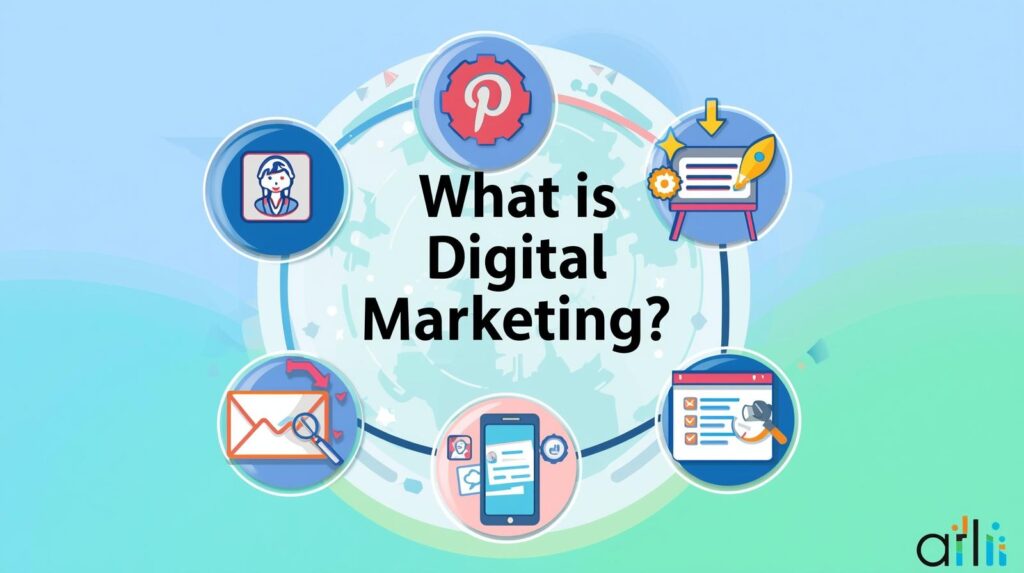
Digital marketing uses online platforms and internet-based tools to promote products and services. Common digital marketing channels include:
- Social media platforms
- Websites and blogs
- Search engines
- Email marketing
- Online advertisements
- Video platforms
When comparing Traditional Marketing vs Digital Marketing, digital marketing is the modern approach that is rapidly growing. Today, many people spend hours on mobile phones and computers, making online marketing very effective.
Digital marketing offers precise targeting. Businesses can choose who sees their ads based on age, location, interests, and behaviour. This makes campaigns more focused and often more affordable.
Another important advantage is measurement. Digital tools allow businesses to track views, clicks, and conversions. This clarity is a major difference in Traditional Marketing vs Digital Marketing discussions.
Cost Comparison
One of the biggest concerns for small businesses is budget. Cost plays a major role in deciding between Traditional Marketing vs Digital Marketing.
One of the biggest concerns for small businesses is budget. Cost plays a major role in deciding between Traditional Marketing vs Digital Marketing. Every business, especially startups and local companies, must carefully plan how much they can invest in marketing without affecting their overall operations.
Traditional marketing often requires higher spending. A newspaper advertisement, radio slot, or TV commercial may cost a significant amount of money. Even printing banners, brochures, and flyers adds to expenses. In addition, businesses may need to pay for design, distribution, and media booking. For small businesses with limited budgets, these costs can be challenging.
Digital marketing usually offers more flexibility and control over spending. Businesses can start with smaller budgets and increase investment gradually as they see results. Online advertisements on social media or search engines allow companies to set daily limits and target specific audiences. Campaigns can be adjusted, paused, or optimized at any time. This makes digital marketing highly attractive for startups and small businesses that want measurable results with lower risk.
For example, institutions like AKN Academy can promote their courses online with targeted ads to reach students in specific locations. Instead of spending heavily on newspaper ads, they can use digital platforms to reach the right audience more efficiently and track performance in real time.
However, this does not mean traditional marketing is always ineffective. For certain industries, local promotions, or community-based campaigns, traditional marketing may still provide strong value. A local event banner, newspaper feature, or radio announcement can help build credibility and awareness within a specific area.
When comparing Traditional Marketing vs Digital Marketing, budget flexibility often becomes a deciding factor. Digital marketing offers cost control and measurable returns, while traditional marketing can provide broad exposure and brand recognition when used strategically.
Audience Reach
Audience reach is another very important factor when comparing Traditional Marketing vs Digital Marketing. It helps businesses understand how many people can see their message and how accurately they can reach the right customers.
Traditional marketing usually reaches a general and broad audience. For example, a billboard placed on a busy road or a TV advertisement during prime time can be seen by thousands or even millions of people. However, the message is shown to everyone, whether they are interested in the product or not. This method is useful when businesses want wide visibility and strong brand awareness. Large companies often use traditional marketing to build trust and create a strong public image.
On the other hand, digital marketing allows highly targeted reach. Businesses can choose who sees their ads based on age, location, interests, online behavior, and many other factors. For example, a coaching centre in Kerala can target only students in a particular city who are interested in competitive exams. This saves money and increases the chances of getting real customers.
Digital platforms also allow businesses to track results in real time. They can see how many people clicked the ad, visited the website, or made a purchase. This makes digital marketing more measurable and data-driven compared to traditional marketing.
This targeting ability and tracking feature are some of the strongest advantages when analysing Traditional Marketing vs Digital Marketing. While traditional marketing is powerful for mass exposure, digital marketing is more effective for reaching the right audience at the right time with the right message.
Interaction and Engagement
Traditional marketing is mostly one-way communication. Businesses send messages, but customer interaction is limited.
Digital marketing supports two-way communication. Customers can like, comment, share, and message. This builds stronger relationships.
Engagement plays a major role in modern branding, which makes digital platforms very powerful in Traditional Marketing vs Digital Marketing comparisons.
Speed and Flexibility
Traditional marketing campaigns usually need more time and preparation. Before launching a newspaper advertisement, magazine ad, billboard, or TV commercial, businesses must plan carefully. Designing the advertisement, printing materials, booking media space, and final approval all take time. Once the ad is published or broadcast, it cannot be easily changed. If there is a mistake or if the business wants to update the message, it may require extra cost and additional time. Because of this, traditional marketing is less flexible and slower to adjust.
In addition, traditional campaigns often require coordination between multiple teams such as designers, printing companies, media agencies, and distributors. This makes the process longer and sometimes more expensive. For seasonal offers or short-term promotions, this delay can reduce effectiveness.
On the other hand, digital marketing campaigns can be launched very quickly. A business can create and publish an online advertisement within minutes. Social media ads, search engine ads, and email campaigns can go live almost instantly. If needed, the content, budget, or target audience can be edited at any time. Ads can also be paused or stopped immediately if they are not performing well.
This flexibility gives businesses a strong advantage. They can respond quickly to market changes, customer trends, competitor actions, or special events. For example, if a product suddenly becomes popular, a company can create a new digital campaign the same day to take advantage of the trend.
Speed and flexibility are important in today’s fast-moving business world. This is why speed is another key difference when evaluating Traditional Marketing vs Digital Marketing. While traditional marketing focuses on long-term planning and mass exposure, digital marketing offers quick execution, easy updates, and real-time control.
Trust and Familiarity

Traditional marketing often feels more trustworthy to some people because it has existed for a long time. Seeing ads in newspapers or television may create a sense of credibility.
Digital marketing builds trust through reviews, ratings, and consistent online presence. Younger audiences especially rely on online information.
Both forms contribute differently to customer trust in the context of Traditional Marketing vs Digital Marketing.
Measuring Results
Measuring success is often difficult in traditional marketing. When a company runs a newspaper ad, TV commercial, radio promotion, or billboard campaign, it is hard to know exactly how many people saw the advertisement and took action because of it. Businesses may receive more calls or sales, but they cannot clearly identify whether those results came directly from the advertisement. Most of the time, companies rely on estimates, surveys, or general sales growth to measure performance. This makes traditional marketing less precise and harder to analyse.
For example, if a business places a billboard in a busy area, thousands of people may pass by every day. However, it is almost impossible to track how many people actually noticed the ad, remembered it, or decided to purchase because of it. This lack of clear data can make decision-making more challenging.
In contrast, digital marketing provides detailed and accurate data. Businesses can track impressions (how many times the ad was shown), clicks (how many people interacted with it), and conversions (how many completed a desired action such as purchasing or signing up). Platforms also provide information about audience behavior, including age, location, interests, and time spent on a website.
This data helps businesses understand what is working and what is not. If an ad is not performing well, they can quickly adjust the message, target audience, or budget. This ability to measure and optimize campaigns improves overall marketing performance and return on investment.
Measurement clarity strongly influences decisions about Traditional Marketing vs Digital Marketing. While traditional marketing offers broad exposure, digital marketing provides measurable results, real-time insights, and better control over strategy improvement.
Which is Better?
Conclusion
Marketing methods continue to evolve alongside technology, consumer expectations, and changing patterns of customer behaviour. What worked a decade ago may not deliver the same results today, and strategies that seem dominant now may eventually be replaced by newer approaches. In this constantly shifting environment, both traditional and digital marketing remain relevant, each offering unique advantages. Understanding Traditional Marketing vs Digital Marketing enables businesses to make informed, strategic decisions rather than blindly following popular trends or imitating competitors.
Traditional marketing continues to hold significant value in many situations. Channels such as print advertisements, banners, billboards, radio, and television often provide strong local visibility and a sense of familiarity that audiences trust. These methods can be particularly effective for businesses targeting specific geographic areas or demographics that respond better to offline communication. Traditional marketing also builds brand recognition through repeated exposure, which can influence customer perception over time. Despite the rise of digital platforms, it still plays an important role in many industries and market segments.
Digital marketing, however, introduces an entirely different level of flexibility, precision, and measurability. Businesses can track performance in real time, analyse customer interactions, and adjust campaigns quickly based on actual data. Online platforms allow highly targeted communication, helping businesses reach specific audiences based on interests, behaviour, and intent. This ability to refine strategies and optimise spending has made digital marketing a powerful and often cost-efficient tool in the modern business landscape. Its scalability and adaptability make it especially attractive for growing companies and competitive markets.
For business owners in Kerala, the most effective strategy is rarely about choosing one method while rejecting the other. The smarter approach involves understanding the nature of the business, the characteristics of the target audience, and the context in which customers make decisions. Some businesses benefit greatly from banners, local sponsorships, and community-focused advertising, while others experience faster growth through search engines, social media, and online engagement. A balanced perspective allows businesses to combine strengths rather than limit opportunities. This practical understanding represents the true insight behind Traditional Marketing vs Digital Marketing.
Another crucial factor is adaptability. Markets evolve, customer preferences shift, and technological capabilities expand continuously. Businesses that remain open to learning, experimentation, and refinement typically achieve stronger long-term results. Rigid strategies often lose effectiveness, while flexible thinking encourages innovation and improvement. Whether utilising traditional channels, digital platforms, or a combination of both, success depends on aligning marketing efforts with customer needs, business goals, and measurable outcomes.
It is equally important to recognise that marketing is not solely about tools or platforms but about communication and value creation. Effective marketing clearly conveys relevance, builds trust, and addresses genuine customer problems. Visibility without connection rarely produces sustainable results. Businesses must focus on crafting meaningful messages, maintaining consistency, and delivering experiences that reinforce credibility. Strategic thinking and customer understanding consistently outperform random promotional activities.
In the end, marketing is fundamentally about connecting with people. While channels, technologies, and tactics may differ, the core objective remains unchanged: reaching the right audience with the right message at the right time. By developing a clear understanding of Traditional Marketing vs Digital Marketing, businesses can design balanced strategies, allocate budgets more intelligently, reduce wasted effort, and build stronger relationships with customers. Thoughtful decisions grounded in knowledge, rather than assumption, often lead to more stable, efficient, and sustainable growth.